T-Bill Interest Rates: How They Work and Why They Matter
Treasury bill yields reflect expectations for central bank policy and help shape the cost of borrowing across the economy, from savings accounts to car loans.
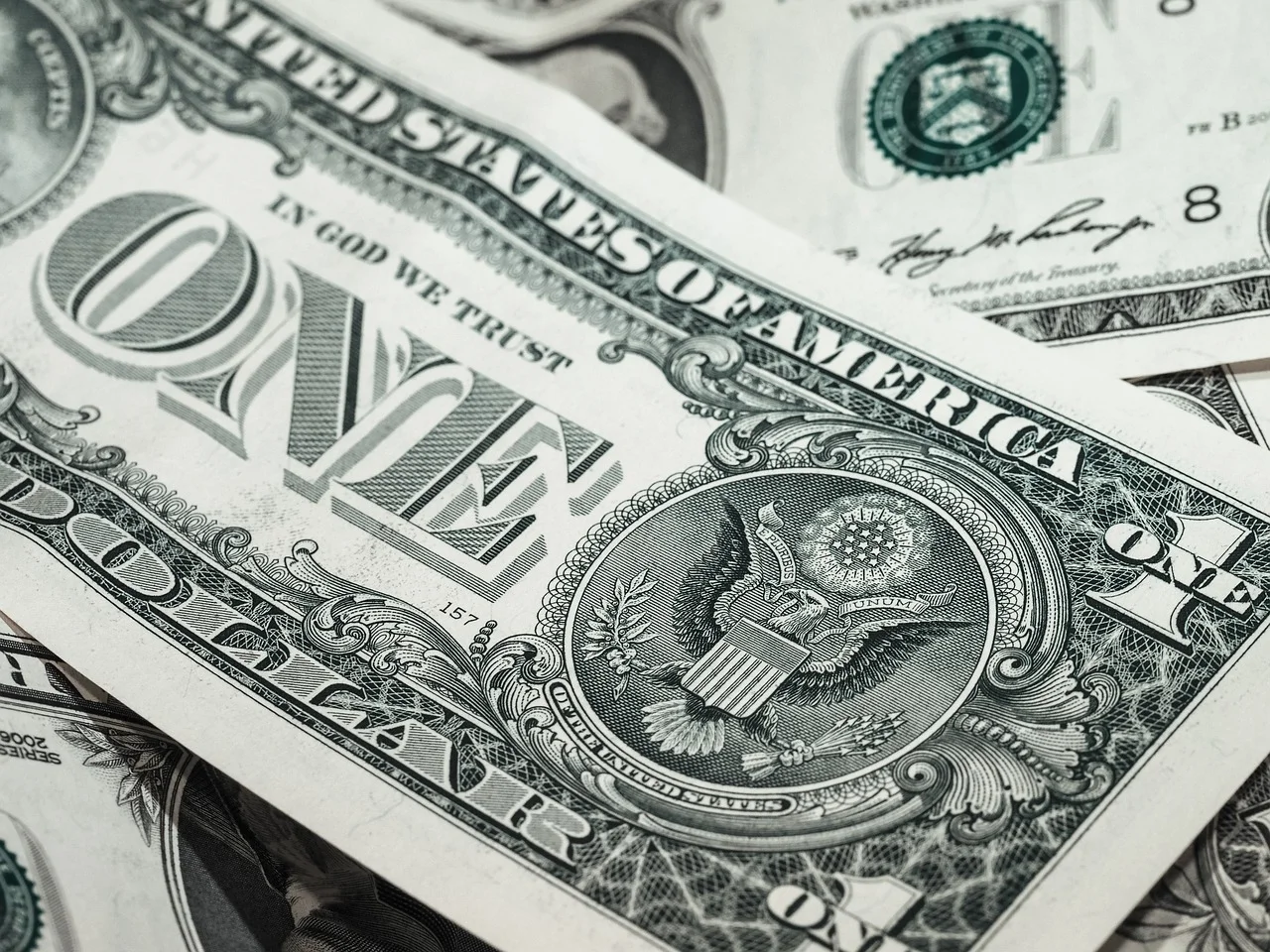
T-bill interest rates are the yields investors earn on US Treasury bills, which are short-term debt securities issued by the US Department of the Treasury with maturities of one year or less. T-bills pay no periodic coupon. They are sold at a discount to their face value, and the investor receives the full face value at maturity. The difference between the purchase price and the face value is the interest. Because T-bills are backed by the full faith and credit of the US government and mature quickly, their rates are widely treated as a benchmark for the short-term, low-risk cost of money.
This explainer covers how T-bill rates are set, what moves them, why investors watch them, and how they connect to the rates consumers see on mortgages, refinancing and car loans.
How T-bill interest rates work
Sold at a discount, redeemed at face value
A T-bill works like a short-term IOU. The Treasury offers bills in a range of maturities, from a few weeks up to 52 weeks. An investor pays less than face value today and receives face value when the bill matures.
A hypothetical example shows the mechanics. If a bill with a $1,000 face value is bought for $990 and held to maturity, the investor earns $10. The annualized rate depends on how long the bill was held. Earning $10 over four weeks implies a much higher annual rate than earning $10 over a full year.
Set by auction
The Treasury sells T-bills through regular public auctions on a published schedule. Bidders fall into two groups:
- Competitive bidders, usually banks, dealers and large institutions, state the yield they are willing to accept. The Treasury accepts bids from the lowest yield upward until the offering is filled.
- Noncompetitive bidders, including many individuals who buy through TreasuryDirect or a brokerage, agree to accept whatever yield the auction produces.
All successful bidders receive the same rate, known as the high or stop-out rate. After the auction, T-bills trade in the secondary market, and their prices and yields change continuously as conditions shift.
Discount rate versus investment rate
T-bill yields are often quoted in two ways, which can confuse new investors:
- Discount rate (bank discount yield): the discount expressed as a percentage of face value, annualized on a 360-day year. This is the traditional market quote.
- Investment rate (bond-equivalent or coupon-equivalent yield): the return measured against the price actually paid, annualized on a 365-day basis. This figure is better for comparing a T-bill with a savings account, a CD or a coupon-paying bond.
The investment rate is always slightly higher than the discount rate for the same bill, because the return is measured against a smaller base.
Tax treatment
Interest on T-bills is subject to federal income tax but exempt from state and local income taxes. For investors in high-tax states, this can make a T-bill's after-tax return more competitive than a bank product with a similar headline rate.
What moves T-bill rates
Central bank policy
The strongest influence on T-bill interest rates is the Federal Reserve's target range for the federal funds rate, the rate banks charge each other for overnight loans. T-bills compete with other short-term, cash-like instruments, so when the Fed raises or lowers its policy rate, bill yields tend to move in the same direction.
T-bills often move before the Fed acts. Because a 13-week or 26-week bill spans several future policy meetings, its yield reflects what the market expects the Fed to do over that period, not only where rates stand today. When traders begin to price in a hike, bill yields usually rise ahead of the decision.
Recent signals show how quickly those expectations can change. On November 16, 2026, Prognosticz recorded a signal titled Fed hawkish repricing raises expectations of a 50 bps rate hike. Two days later, on November 18, 2026, it logged that the market prices a near-certain Fed rate hike in December 2026. Shifts like these are exactly what short-dated T-bill yields tend to absorb as they happen, although a forecast is not a guarantee of what a central bank will decide.
Supply and demand
The volume of bills the Treasury issues matters as well. When the government needs to raise more short-term cash, heavier bill supply can push yields up. When investors rush toward safety, for example during market stress, strong demand for bills can push yields down, sometimes sharply.
Debt ceiling episodes and liquidity needs
Bills maturing around a possible debt ceiling deadline sometimes trade at unusual yields, because investors worry about delays in repayment. Quarter-end and tax-date cash needs at large institutions can also cause brief distortions.
Why T-bill interest rates matter for investors
The risk-free benchmark
In finance, the T-bill rate is commonly used as the risk-free rate. It is the baseline return an investor could earn without taking credit risk and with minimal interest rate risk. Other investments are judged against it. An investment that cannot beat the T-bill rate after adjusting for risk is hard to justify.
Valuation and the cost of capital
Higher short-term rates raise the discount rate used in many valuation models, which tends to weigh on the present value of future earnings, especially for growth companies whose profits lie far in the future. Higher bill yields also make cash a more attractive alternative to stocks, which can affect how investors allocate money.
A read on market expectations
Because bills reflect expected policy over their life, comparing yields across maturities offers a quick view of where the market thinks rates are heading. If the 26-week yield sits well above the 4-week yield, the market is likely pricing in rate increases. Comparing bill yields with longer Treasury yields reveals the shape of the yield curve, which analysts watch for signs of economic strength or weakness.
Global context
Other central banks influence their own short-term government debt in the same way. On November 3, 2026, Prognosticz recorded that the RBA hiked its cash rate to 4.85%, with a December pause likely. Differences in policy paths between countries affect currency values and cross-border capital flows, which can feed back into demand for US Treasury bills.
How T-bill rates connect to consumer borrowing
T-bill rates are not consumer loan rates, but they sit at the start of a chain that eventually reaches household borrowing.
Refi interest rates
Mortgage rates, and therefore refi interest rates, are more closely tied to longer-term yields, especially the 10-year Treasury yield and mortgage-backed securities, than to T-bills. Even so, the Fed's short-term policy outlook influences longer yields through expectations for growth and inflation. When bill yields climb because the market expects tighter policy, homeowners often find that refinancing becomes less attractive, although the connection is not one-for-one.
Auto finance interest rates
Auto finance interest rates tend to respond more directly to short-term rates, because car loans usually run a few years and lenders fund themselves at rates linked to short-term benchmarks. When the Fed raises rates and bill yields rise, banks, credit unions and captive finance companies generally reprice new auto loans upward over time. A borrower's credit score, the loan term, the down payment and whether the vehicle is new or used still play large roles in the final rate.
Credit union and bank loan rates
Searches such as "NFCU interest rates auto" reflect how many borrowers compare specific lenders, including credit unions like Navy Federal Credit Union. Each lender sets its own rates based on funding costs, competition and risk appetite, so quotes vary. The broad direction of short-term rates, which T-bills help reveal, shapes the environment in which those individual rates are set.
Related concepts
- Federal funds rate: the Fed's main policy rate, which anchors short-term borrowing costs.
- Treasury notes and bonds: longer-term government securities with maturities from 2 to 30 years that pay semiannual coupons.
- Yield curve: a chart of Treasury yields across maturities, used to gauge market expectations.
- SOFR (Secured Overnight Financing Rate): a benchmark for overnight borrowing backed by Treasury securities, used to price many loans and derivatives.
- Money market funds: funds that often hold T-bills and similar instruments, so their yields usually track bill rates.
- Real interest rate: the nominal rate minus inflation, which shows the actual gain in purchasing power.
Frequently asked questions
Are T-bill interest rates fixed?
Yes, for a buyer who holds to maturity. The rate is locked in at purchase. Market yields on newly issued and existing bills change constantly, so the next bill bought may carry a different rate.
How do individuals buy T-bills?
Individuals can buy T-bills directly from the government through TreasuryDirect, usually as noncompetitive bidders at auction, or through a brokerage account, which also allows buying and selling in the secondary market.
Why do T-bill rates change before the Fed announces a decision?
Bills cover future periods, so their yields reflect expected policy. When the market comes to expect a hike or a cut, bill prices adjust right away rather than waiting for the announcement.
Do T-bill rates affect mortgage and auto loan rates?
Indirectly. Auto loans tend to track short-term rates more closely, while mortgages follow longer-term Treasury yields. Both are influenced by the same policy expectations that drive T-bills.
What is the risk of holding T-bills?
Credit risk is considered very low. The main risks are that inflation outpaces the yield, and that selling before maturity after rates rise can mean a small loss on price.
Tracking interest rate expectations with Prognosticz
Because T-bill yields react to changing views on central bank policy, following rate expectations helps explain why bill rates, and later consumer borrowing costs, move. Prognosticz tracks these shifts in its Expected Interest Rate Cut and Hike Forecast signal page, covering the Federal Reserve and other central banks. A free account is available through the Prognosticz sign-up page.
This article is for information only and is not investment advice.